Different Types of Powder Coating Ovens and How to Choose the Right One

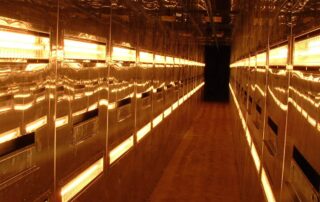
For professional results in powder coating, choosing the right type of curing oven is essential.  A high-quality curing oven will produce superior results, as well as save money in energy costs. There are many options in powder coating ovens, each with their own set of advantages and disadvantages. The two main types of powder ovens include infrared and convection curing. The main difference between these two ovens is how they work. Convection Powder Coating Ovens Convection ovens use convection heat, transferred through the air, to increase the temperature of the  oven and the product surface. Curing in a convection oven starts on the outside of the product and works in. This outside-in method means it takes longer to cure the powder coating than it would with infrared. Due to the longer process, convection ovens are more often used for small production shops. But because convection ovens cure slower, they generally cost less than infrared ovens to purchase. There are two types of convection ovens: electric and gas-powered. Electric ovens usually have smaller variation in temperature control and cost less to [...]

2023-03-07T13:09:24-05:00March 7th, 2023|Industrial Ovens|Comments Off on Different Types of Powder Coating Ovens and How to Choose the Right One

Maximizing Efficiency with Industrial Powder Coating Ovens

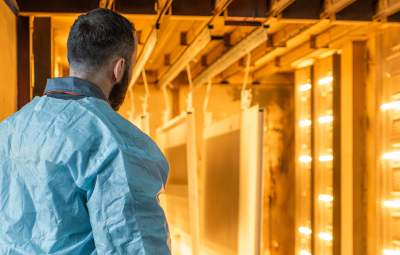
To maximize the efficiency of your industrial powder coating operation, it's crucial to ensure that your batch powder curing oven is performing at its best. The following information outlines items to consider that may help solve curing issues, improve your efficiency and increase the lifespan of your equipment. Air Temperature And Airflow One of the key factors that can impact the quality of your finished products is the air temperature and airflow within the oven. It's important to note that temperature uniformity can vary from oven to oven. Be aware that ovens with ceiling ducts may be cooler at the floor level, while ovens with wall ducts may have cooler areas in the corners and close to the floor. It's crucial that you regularly monitor temperature levels with an oven data recorder and keep a log of the results. To prevent changes in the way the oven functions, it is essential to check for modifications in the movement of air within your building. Is there wind blowing into the structure from outside? Were building exhaust fans deactivated but vents left [...]

2023-10-03T14:30:23-04:00March 7th, 2023|Design & Engineering, Industrial Ovens|Comments Off on Maximizing Efficiency with Industrial Powder Coating Ovens

Heating Sources For Industrial Ovens

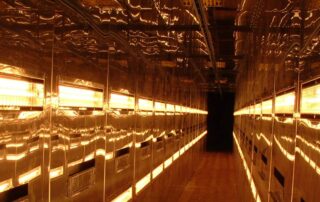
When it comes to industrial ovens, the first two things to consider are the source of the heat and the airflow pattern. The fuel for the heat that’s introduced into the oven can come from a variety of sources including gas, steam, water, electricity, or ultraviolet light. The fuel an oven uses dictates how it works. Gas Ovens There are two types of gas ovens, direct and indirect. In a direct gas oven, a gas or propane burner heats the air that is circulated through the system using a fan. They generally operate at temperatures between 200° F and 500° F, but can reach up to 1000° F. Indirect gas ovens use a gas or propane heat exchanger. A circulating fan pushes air through the heat exchanger to radiation tubes. With this format, the flame is enclosed within a sealed combustion chamber away from the work area. The flame never touches the circulating air. Steam Ovens With a steam oven, water is heated to the boiling point; the resulting steam is used to heat the oven. This is a slower [...]

2023-01-03T14:38:54-05:00January 3rd, 2023|Industrial Ovens|Comments Off on Heating Sources For Industrial Ovens

Industrial Ovens – What Types Are Available?

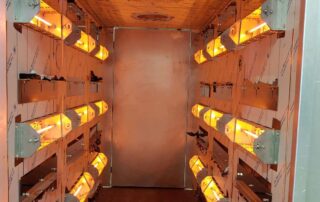
Industrial ovens are used to cure coatings, condition metals, and treat parts using high temperatures. Most ovens fall under one of two categories – batch or continuous. Batch ovens treat large quantities of products at one time and come in sizes ranging from a few cubic feet to several cubic meters. They are manufactured in benchtop versions for smaller products and walk in versions for large scale production. They are generally heated by direct or indirect electrical elements or burners. Continuous ovens, also known as conveyor ovens are part of a mass production system that are continuously fed products. They are designed to fit into a specific manufacturing process that includes a conveyor system. Continuous ovens are used for a variety of purposes including drying, curing, bonding, forming, and more. They may have multiple heating and/or cooling zones. What Are The Different Types Of Industrial Ovens? Industrial ovens come in endless varieties and new ones are constantly being designed to meet specific needs. However, below are the most widely manufactured and used industrial ovens. Curing ovens, also known as baking [...]

2022-12-06T12:37:07-05:00December 6th, 2022|Industrial Ovens|Comments Off on Industrial Ovens – What Types Are Available?
Go to Top