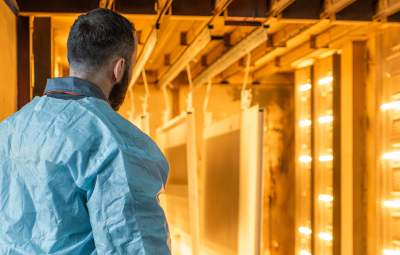
In The Powder Coating Pretreatment Process, Various Methods May Be Needed

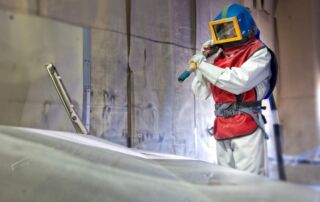
As mentioned in a previous post, pretreatment of parts in a powder coating process is the key to a successful finish. When parts are properly prepared, the powder coating adheres as it should and creates a long-lasting, corrosion-resistant, protective layer. One method for pretreatment is manually applying chemicals to the part. However, when throughput demands are high, an automated system will be a better solution. An automated pretreatment process consists of three to nine stages. In a simple three-step method, there’s a heat treatment step, a rinse step, and a sealant. A more complex system includes multiple heating and rinsing steps, and special sealants. Removing Hard-To-Remove Contaminants When the part has contaminants that are hard to remove, another step may be needed for cleaning parts. Blasting, also known as sandblasting or media blasting, this a mechanical cleaning method that uses high-velocity abrasive particles to clean and prepare a surface. Blasting removes contaminants, such as rust, old coatings, and minor surface defects. Blasting ensures an even surface for the coating and can also aid the adherence of the powder by creating [...]

2025-01-06T12:17:17-05:00December 9th, 2024|Pretreatment & Surface Prep Booths|Comments Off on In The Powder Coating Pretreatment Process, Various Methods May Be Needed

Step 1 Of The Powder Coating Process: Pretreatment

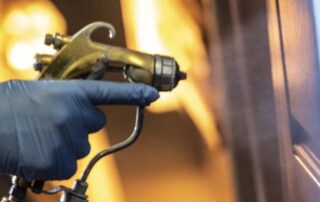
The pretreatment stage of powder coating process, also known as parts prep, is crucial to the success of the finish. Ensuring that the parts are properly cleaned and prepared to accept the powder coating may be the most critical step. This step ensures the powder coating adheres properly, resulting in a long-lasting, corrosion-resistant, protective layer. Most defects in a powder coated part are due to inadequate pretreatment. Different materials require different pretreatment approaches and often, there are strict guidelines that need to be met. Step one in pretreating parts begins with cleaning – mostly with chemicals. The amount of cleaning required is dependent on the condition of the parts. Is the part brand new and relatively clean? Or has it been sitting on the manufacturing floor or outdoors for weeks and gotten rusty? Is there oil, grease, or welding spatter on the part that needs to be removed? Manual pretreatment cleaning methods, such as using a pump sprayer or spray wand, are common for most shops. With this set-up, an operator manually applies chemicals using specific equipment. Sometimes pretreatment with [...]

2025-01-07T08:40:01-05:00November 11th, 2024|Pretreatment & Surface Prep Booths|Comments Off on Step 1 Of The Powder Coating Process: Pretreatment

New Conversion Coating Technologies

Traditionally, conversion coating pretreatment process options have been limited. For the most part, they include either an iron or zinc phosphate. Although these have been sufficient in performance in the past, concerns have recently risen regarding their inefficient energy and water usage. Iron Phosphate Pretreatment Systems Iron phosphate systems are most often used when a durable finish is required but the parts are not exposed to extremely corrosive environments. These systems involve up to six stages, including multiple cleaning and rinsing phases which require a lot of water and energy. Zinc Phosphate Pretreatment Systems Zinc phosphate coatings provide exceptional durability even in corrosive environments and they are capable of coating mixed metals. However, zinc phosphate systems require even more phases than iron systems. Zinc phosphate systems are different in a couple ways from an iron system. Primarily, the zinc system requires a surface conditioner stage, which happens just before the zinc phosphate stage. Since the surface conditioning chemistry is a colloidal suspension, it ages over time and must be dumped frequently to be effective. Again, wasteful in energy and water. [...]

2023-06-20T14:04:29-04:00June 9th, 2022|Pretreatment & Surface Prep Booths|Comments Off on New Conversion Coating Technologies

Preparing Metal Surfaces For Conversion Coating

When painting metal products, preparing the material for finishes is essential. The surface must be treated with a conversion coating. During this treatment, the metal surface undergoes a chemical reaction that and is essential for the durability of the finish, promoting adhesion and increasing corrosion resistance. Before applying the conversion coating, the metal must be prepared. Contaminants must be removed from the metal surface Prior to coating, metal surfaces must be cleaned. If the cleaning does not thoroughly eliminate contaminants, a uniform conversion coating will not be created resulting in a metal surface that is not properly protected from corrosion. The most common method used is aqueous cleaning; however, other methods include ultrasonic cleaning and vapor degreasing. With aqueous cleaning, the cleaner is water-based with various other chemicals mixed in, such as detergents and surfactants. In addition to the cleaner, heat and agitation are used to remove contaminants. Aqueous cleaning is highly effective in removing ionic contaminants, and is most often used when the process combines cleaning with the application of protective coatings or surface finishes. With vapor degreasing, solvent [...]

2023-06-20T14:04:56-04:00June 9th, 2022|Pretreatment & Surface Prep Booths|Comments Off on Preparing Metal Surfaces For Conversion Coating
Go to Top